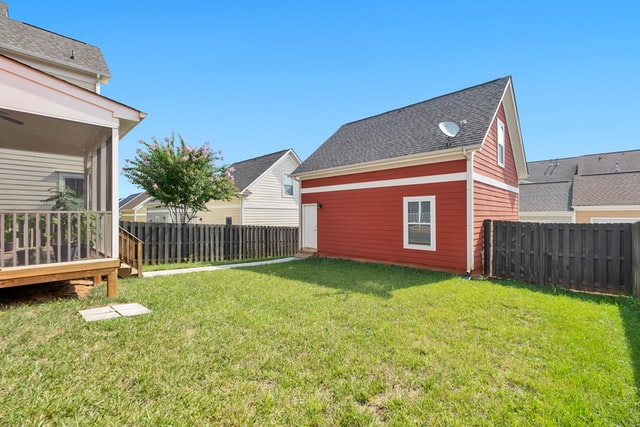
It appears Australians have been sacrificing a lot of yard space over the past decade — new data show that they are building the same size of new homes but the land they are constructing them on to has been shrinking since 2012.
Data from the Australian Bureau of Statistics show that the average land size of new houses decreased by 13%, down from 496 square metres in 2012 to 432 square metres in 2021.
The decline has been steady since 2012, except in 2016 when the site area for new houses increased in size.
Capital cities across the five largest states followed the downtrend, resulting in a more denser housing situation.
Greater Brisbane reported the biggest drop in average site area, down by 20% over the past decade from 571 square metres to 459 square metres.
Of all capital cities, Greater Adelaide posted the smallest decline in average land size at only 6%, from 498 square metres to 468 square metres.
Average site areas for new houses
Greater Capital City Statistical Area
Size (square metres)
2012
2021
Greater Sydney
514
423
Greater Melbourne
490
429
Greater Brisbane
571
459
Greater Adelaide
498
468
Greater Perth
448
399
Combined Capital Cities
496
432
New house size staying the same
Interestingly, the average floor area of new houses approved over the last 10 years only declined by 1%, down from 245 square metres in 2012 to 242 square metres in 2021. This has led to an increase in the ratio of floor-to-site during the period, from 0.49 to 0.56.
Across the five biggest state capitals, Perth and Sydney reported the highest decrease in average floor size, with both reporting a 7% decrease.
Meanwhile, the average floor size of new homes in Melbourne remained the same over the past 10 years at 247 square metres.
Average floor areas for new houses
Greater Capital City Statistical Area
Size (square metres)
2012
2021
Greater Sydney
271
254
Greater Melbourne
247
247
Greater Brisbane
229
241
Greater Adelaide
209
220
Greater Perth
229
214
Combined Capital Cities
245
242
Why land sizes are shrinking
REA Group economic analyst Megan Lieu said the cost of land is on top of the reasons why the trend of shrinking land sizes exists.
“With an expanding population, the amount of land we have in suburban areas is becoming more finite — this means that Australians have to pay a premium to buy homes with more land,” she said.
This could continue, Ms Lieu believes, as the increase in cost of living and rising rates make it impossible for Australians to pay premium on land.
The rise in urban infill is also a reason behind the trend.
“This involves repurposing underutilised areas, such as open green-space, of existing suburbs to build additional housing,” Ms Lieu said
“As most suburbs undergoing this transformation have infrastructure and transport, shared community spaces and are closer to jobs, land plots in these developments are smaller than what may be offered further out.”
—
Photo by @zacgudakov on Unsplash
Top Suburbs :
flemington
,
belmont
,
st marys
,
narara
,
leumeah
Get help with your investment property
Do you need help finding the right loan for your investment?
When investing in property, it is important to make sure that you not only have the lowest available rate that you can get, but also have the correct loan features for your needs.
Just fill in a few details below and we’ll then arrange for a local mortgage broker to contact you and work out what features or types of loans are right for your needs. We’ll even help with the paperwork. Plus an appointment is free.
We value your privacy and treat all your information seriously – you can check out
our privacy policy here