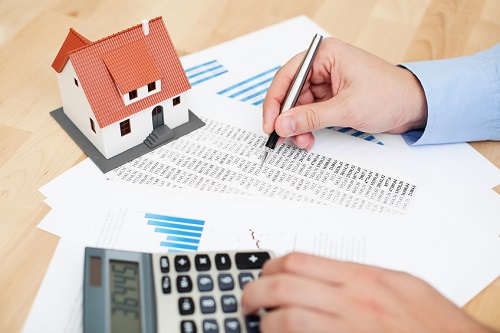
Rental home owners benefit from a plethora of tax deductions that allow them to maximize the return on their investments – and depreciation is one of the biggest expenses they have to spend. they can claim.
Depreciation is defined as a reduction in the value of an asset with the passage of time due to wear and tear. This is very much true in real estate investments where the structure of the building and the assets within it wear out over time.
The Australian Taxation Office (ATO) allows rental property owners to claim depreciation as a tax deduction in two categories. These are tangible fixed assets and tangible fixed assets.
Claim for Deductions for Capital Works
Homeowners can claim capital works deductions for wear and tear on the building structure – including walls, doors, windows and roofs, as well as any fixed part of the property like wardrobes and wardrobes.
For residential properties that began construction after September 15, 1987, owners can claim capital works deductions at the rate of 2.5% for 40 years.
Meanwhile, owners of rental properties built before this date can ask the ATO what depreciation deductions are available, as some of these properties may have undergone renovations, which may result in deductions for capital works.
However, before claiming the depreciation of a building, there are some things that property owners should know in order to be able to make a correct claim.
Start date of works
Depreciation percentages are calculated based on when construction of the building began. Homeowners can claim depreciation differently, depending on when the property was built.
Completion date of construction
Homeowners cannot start claiming depreciation until construction is complete on the property, so it is essential that they know this date.
Construction cost
Homeowners also need to know how much it costs to build the property. A quantity surveyor can estimate the cost of construction for tax purposes if the owner does not know the true cost.
Type of construction
Owners should know the destination of the building eg. house, townhouse, apartment or commercial property.
Who carried out the construction
It can be the owner, developer or builder.
It is also important to note that owners of residential properties may write off the cost of structural improvements if construction began after February 26, 1992.
Claim for the depreciation of plant and equipment
Landlords can also claim capital cost allowance for removable appliances and fixtures found in rental property, including appliances, rugs, blinds, and smoke detectors. Deductions for these assets are calculated based on their individual effective lifespan set by the ATO.
But due to legislative changes in November 2017, owners of used residential properties who exchanged contracts after 7:30 p.m. on May 9, 2017 can no longer claim deductions for previously used tangible capital assets.
However, they can still claim depreciation for any new plant and equipment they purchase and install in the rental property once it begins to generate income.
There are two methods that landowners can use to calculate the amount of facility and equipment depreciation they can claim on their rental properties. They are:
Principal cost method
The asset's depreciation is distributed evenly over its useful life. For example, a $ 1,000 asset with a useful life of four years would be depreciated at $ 250 per year.
Decreasing cost method
Depreciation of the asset is calculated based on the depreciated value of the asset for each year of its useful life. This means that the tax deduction is greatest during the first few years of the asset's life, rather than spread evenly over its useful life.
Get Depreciation Schedule
Although the claim for depreciation of an investment property can be made only by owners, most owners choose to have a professional surveyor set up an amortization plan due to the complex calculations. and the paperwork involved.
The cost of preparing a tax depreciation plan varies depending on several factors including type of property, location, and size. A simple amortization plan could cost around $ 200, while a full report could cost homeowners over $ 1,500.
Top suburbs:
queens park
,
melton
,
toowong
,
mt lawley
,
Dulwich Hill
Get help with your investment property
Do you need help finding the right loan for your investment?
When investing in real estate, it is important to ensure that you not only have the lowest available rate possible, but also have the right loan features for your needs. needs.
You only need to fill in a few details below and we will then arrange for a local mortgage broker to contact you and determine the characteristics or types of loans that suit your needs. We'll even help you with the paperwork. In addition, an appointment is free.
We value your privacy and take all your information seriously – you can check
our privacy policy here