Interest rate cuts and lender constraints imposed by the Australian Prudential Regulatory Authority (APRA) will provide a positive boost to buyer demand. However, lenders should maintain more conservative lending policies. New housing completions peaked in 2018-2019 and rental growth slowed due to the high level of new supply.
BIS Oxford Economics estimates that most state markets are oversupplied, with some at best close to equilibrium. Weak wage growth is holding back consumer spending, while declining new home construction is holding back the economy. Economic growth is expected to accelerate before 2020-2021, once residential construction has taken off and as the growth of building activity and business investment begin to stimulate economic growth .
Notably, the decline in buyer demand is now reflected in a decline in the number of new housing starts, which are expected to fall by some 25% from their peak of 220,000 units for 2018/19 to 163. 000 in 2020/21 This drop in new supply will sow the seeds for the next economic recovery. Population growth is expected to remain high, at around 400,000 per year over the next three years, fueled by a large influx of net immigrants from abroad.
The new supply will fall below the underlying demand and a number of markets should start to tighten again. This should in turn see prices start to rise by 2020/21 and accelerate by 2021/22 as economic growth accelerates.
The conditions will be different from one city to another and from one market to the other. Units should face more challenges than individual homes in the coming years.
Overall, housing price growth in most markets is unlikely to exceed inflation over the next three years, although prices are expected to accelerate in most capital cities by 2021/22, while the current downturn in supply is being felt.
Housing prices are expected to rise the most in Brisbane, although it will not be immediate. Price increases will be modest in 2019-2020 as the acceleration of price growth is expected in the following year.
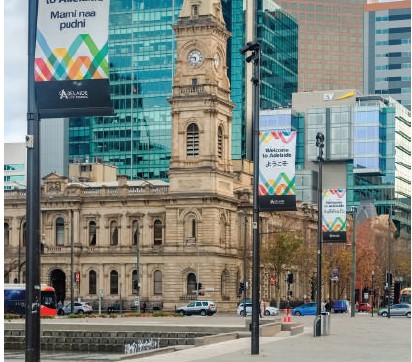
Moderate price increases are expected to slow in Canberra and Adelaide, both anticipating a price hike slightly above the inflation rate.
By June 2022, median housing prices in the Sydney and Melbourne markets are still expected to be lower than their respective peaks in June 2017 and December 2017.
Resource-based Perth and Darwin markets have already experienced significant price declines and will continue to struggle. However, by 2021/22, the stock of surplus housing in these markets should finally be absorbed, which will prepare the ground for higher prices in the following years.
At the same time, the Hobart rock star market is expected to slow down. Affordability is becoming increasingly difficult and increasing supply will ease some price pressures. Only limited price growth is expected until 2022.
Angie Zigomanis is a senior executive at BIS Oxford Economics and author of the report on the Prospects for Residential Real Estate 2019-2022
Top suburbs:
new farm
,
Chermside
,
Coorparoo
,
Padbury
,
Wiley Park
Get help for your real estate investment
Do you need help in finding the right loan for your investment?
When you invest in real estate, it is important to make sure that you do not only have the lowest available rate that you can get, but you also have the features of ready adapted to your needs.
Just fill in a few details below and we will then make the necessary arrangements for a local Australian mortgage broker to contact you and solve the problem What features or what types of loans are suitable for your needs? We will even help with the paperwork. In addition, an appointment is free.
We value your privacy and treat all your information seriously – you can check
our privacy policy here