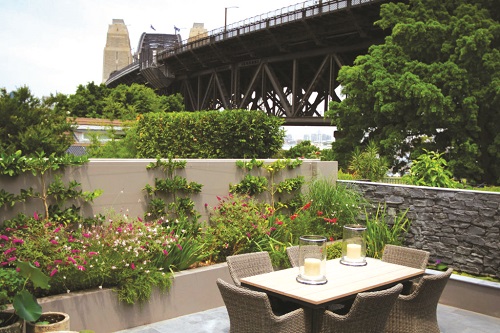
When it comes to renovating a property, particularly for investment purposes, many people place the garden at the bottom of the priority list. There is a state of mind that the exterior part of the house is not as important as the interior.
Being left with the dregs of a renovation budget can mean that your garden ends up running out of inspiration.
"Normally, when people renovate a house and a garden, they spend the budget indoors, thinking that they can save money outside. And the overall finish is quite disappointing, "says director of Inspired Exteriors, Charlie Albone.
Since the garden is one of the first parts of a property that people see, the landscaping expert from Selling Houses Australia points out that it is not the good approach to take.
"You can ruin a whole project by having a really bad domain. It is important to stick to your budget and execute a nice finish throughout the process. Remember that a garden renovation should be of similar quality to renovating your home. "
When renovating outdoors, there are factors to consider that you generally don't need to think about the interior, like the elements. But with careful planning, you can give your property garden a facelift to dazzle the senses and create a welcoming atmosphere that will appeal to years to come.
"The more you plan, the more you can push your budget in different directions"
FIRST STEP: CREATE YOUR VISION
The first and most crucial step in any renovation is to decide exactly what you want to do from the start.
"The more you plan, the more you can push your budget in different directions. So when we talk about planning, we're talking about figuring out how much things are going to cost and how long they're going to take, and making sure it's realistic, "says Albone.
Do you plan to live on the property yourself? Will it be rented or sold? Understanding the purpose of the garden renovation will go a long way in determining the type of aesthetic to favor.
SUPERIOR COUNCIL
If you're looking to distinguish a garden bed from the lawn, the border is a great way to separate these elements while adding a stylish accent. The steel border is more durable but less flexible than plastic.
SECOND STEP: CHOOSE THE CENTRAL PART
Any good garden is designed around a central theme, or centerpiece, which draws the attention of visitors to a specific part of the region. It could be flowers, plants, a single wall or even a pond.
The centerpiece of your garden will be linked to your personal vision of what you want the space to be and the aesthetic you want to achieve – so you can't start working without knowing what you want.
"[When working on a project] we start with what the customer likes, then we dissect the space if necessary," says Albone.
SUPERIOR COUNCIL
When choosing a centerpiece for the garden, look for remarkable characteristics such as color and texture. Make sure that no other aspect of the space dominates it and place your centerpiece in a prominent area.
THIRD STEP: GROWING A DIFFERENT WORLD
A garden is not just a space where you feast on plants and an outdoor setting before you call it a day. You want it to be a space where you or other people can go and find refuge, an escape.
For Albone, one of the best ways to do this is to install a water feature, because water is known for its ability to soothe. It also makes it ideal for city dwellers.
"By adding movement to the water, you also add sound, and that helps you get away from city life," he says.
SUPERIOR COUNCIL
When working with water fountains and other water features, always make sure that the product comes with a warranty in the event of a breakdown. Water damage can cause serious damage if left unchecked.
STEP FOUR: STAYING IN THE LAW
If you are making big changes, like adding a large-scale water feature, you need to check if you need council approval. Talk to your builder or find the standard from your local council. It may take a while, but it will ensure that your work is not interrupted or wasted.
In the meantime, you can update other features of the garden. For example, you may need to replace the flooring with a material designed for a humid environment that can withstand different weather conditions. Stone pavers are generally ideal for exterior floors.
SUPERIOR COUNCIL
When laying natural stone tiles, it is important to make sure that you seal them properly with a paving sealer suitable for the material. To avoid accidents, use a non-slip sealer if the stone is slippery.
FIFTH STEP: IMPROVE GREENERY
Nothing defines a garden more than plant life, and for many, a flowerbed is a great centerpiece. But even if they are not the main center of the space, the plants can add the right note to your garden.
If you don't have a green thumb, or if you are renovating an investment property and want to keep it low maintenance for tenants, there are many plants that are hardy and thrive even with little care.
For example, philodendrons are ideal for mass planting, adding texture and character, and can make do with a light shade. If you have a body of water, aquatic plants are a nice addition.
SUPERIOR COUNCIL
Green is not the only color you can use, even if the flowers are not your centerpiece. A few pops of color here and there will add variety, and flowers can also soften the look of your garden.
SIXTH STEP: LIGHTING THE LIGHT
Outdoor spaces can be great by day, but when the sunlight fades, the beauty of your garden can also go away if you don't keep the space properly lit.
Soft lights are the way to go if you want to create a warm, intimate atmosphere, and they are ideal for small gardens. The sconces or wall brackets provide excellent lighting while being subtle, and the string lights can give the space an ethereal and transcendent atmosphere.
If you have a water feature, the pond lights are a must to showcase its tranquil appeal at night – and for safety reasons!
SUPERIOR COUNCIL
If you are feeling rustic, lanterns are a charming way to decorate your garden – there are varieties that can be left outside, while traditional lanterns should be brought inside home after use.
STEP SEVEN: DRAP THE WALLS
Wall gardens are a great way to save space if you have a small garden but want it to be lush and rich. They can also help you maximize any unused outdoor space. You can grow everything from succulents to shrubs to vines, and even fruit trees like orange and lime, like Albone did with a garden project.
Wall gardens can also help you hide things like an unsightly wall and even serve as a fence, creating a private environment. As the wall gardens operate via a hydroponic system, they often do not need soil.
SUPERIOR COUNCIL
Flowering perennials look great in a wall garden. By growing herbs, fruits and vegetables, you can also make your garden functional and pretty.
STEP EIGHT: GO FOR SUSTAINABILITY
The materials used to renovate a garden should be chosen for their ability to last outdoors.
"If you're trying to cut your budget, you need to use expensive, high-end materials in the key areas that will be most seen," advises Albone.
For example, if a characteristic wall is the centerpiece of your garden, you should allocate more of your budget to a solid material that is guaranteed to withstand the elements, such as natural stone. This material has an earthy vibe which also makes it perfect for the outdoors.
SUPERIOR COUNCIL
According to Albone, natural stone "brings a lot of warmth and a feeling of quality" to your garden. It is also a low maintenance material. To avoid dirt build-up, set a regular schedule to scrub the coating with a soft brush before rinsing.
CASE STUDY
Before
Faced with the prospect of working on the courtyard of one of the oldest terraced houses on the north coast of NSW, Charlie Albone sought to capture the spirit of style desired by the client.
"Customers were renovating their house to connect it to the garden, and they realized that they had to do some landscaping to make it happen," he said.
"They wanted a formal style in their garden, which suited the architecture of the house. The garden was split in two – the back of the garage was a lawn, and the main area we focused on was the courtyard. "
Albone immediately identified a good way of delimiting the boundary of the yard to separate it from the garage. He also installed a pond as the centerpiece of the garden.
"The pond worked so well because it eliminated the steps leading to the lower area. This helped to enclose the space and gave it a nice backdrop. Customers were also very good with their plants, so they wanted aquatic plants and fish, ”he says.
"You can sit by the fountain and watch the fish while the harbor bridge is there in the background."
Since the pond played such a central role in the garden, Albone chose to splurge on it, using natural stone for its wall.
After
"It is a small space with a really healthy budget, so you needed it to look upscale and luxurious, especially with the area in which it was located. You have to match the price of the house with the price of the finishes – it was a high-end house, so we needed high-end finishes, ”he explains.
"In the courtyard, the fountain wall is a key area that really attracts attention. So it was worth investing in natural stone. "
To stay on budget, Albone found other ways to save money – like opting for wood instead of steel frames for the climbing plants he installed. He also chose to simply return the rest of the masonry. To soften the space, he used different types of plants, from fruit trees to flowering perennials, which met customers' love for flowers.
The project was completed in approximately six to eight weeks, and the clients received a pleasant surprise offer on their property shortly after.
"The owners did not plan to sell the house, but they knocked on the door – someone had looked at the work and made an offer to them that they could not refuse "
Charlie Albone
is the director of Inspired Exteriors
and the landscaping expert on selling homes in Australia
Disclaimer: All products and prices quoted are correct at time of printing. The advice in this article is for general information only and should not be considered financial advice. Please be sure to speak to a qualified professional before making any investment decisions.