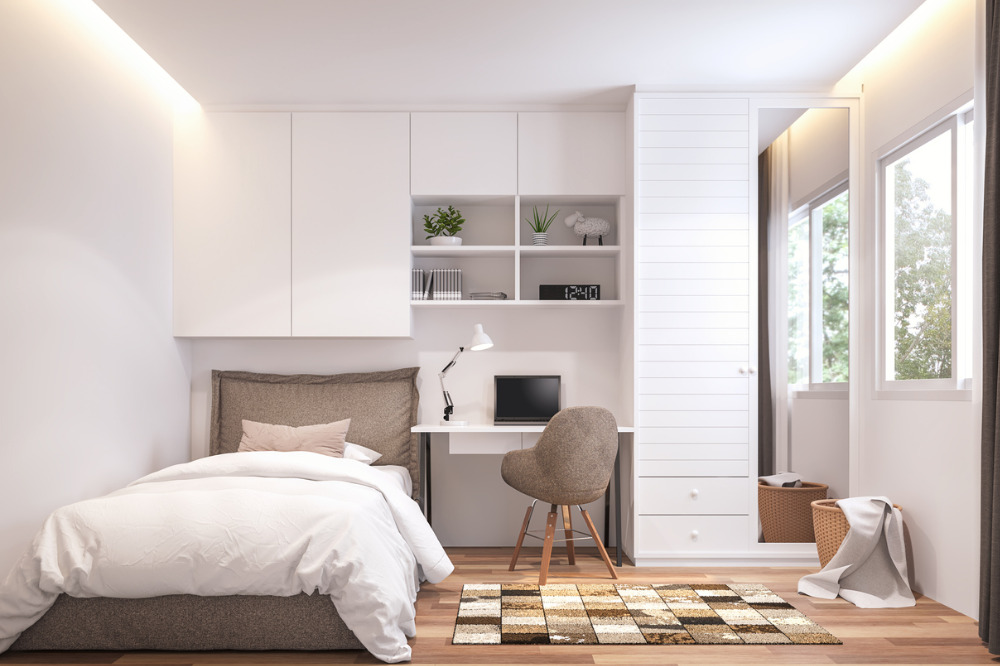
Giving a house a makeover is more than just making the aesthetics pretty. When Jennifer Milne ponders what styling a property means in preparation for her entry into the sales market, she compares it to dressing for an interview at this dream job.
"You wouldn't go for the pajama interview," says Milne, a Gold Coast-based interior designer who has turned some of the more ordinary living spaces into warm sets that can charm any house hunter who dares to step inside.
"So don't put your house up for a maximum price and a quick sale if you haven't dressed it for the best result."
In the past few weeks, homeowners across the country have had to take their daily lives and vacuum the four corners of their homes.
We have never been so attentive to the faded tone of a wall or the need to elevate the dining room so that it goes beyond the simple gathering point – or the fact that the composition of a place can have a direct impact on our mood.
Some Vendors Having Recently Refrained From Selling Via A Digital Auction, Prefering Going To A Private Treaty Or Waiting For The Pandemic To Simmer – Perhaps Now Is The Time To Consider How Your Property Can Stand Out from the many others that could flood the market at the same time.
Knowing what it takes to distinguish one house from the rest, Milne shares the difference color and decor can bring, as well as how owners can bring two of the hottest styles to life.
The difference through another pair of eyes
For Milne, adding to the canvas of a house is an investment in itself, and it doesn't have to be expensive.
"Make sure your home is at its best; that its best features are highlighted and displayed so as to highlight not only the style of house you offer, but also the lifestyle that the house offers to its new owners, ”suggests Milne.
"Furniture doesn't have to be the latest trend and it doesn't even have to match," she adds. "But it must be well positioned."
A welcoming atmosphere will also allow potential buyers to imagine how the house "flows from one area to another," notes Milne.
Followed by a long period of presence in a space, however, an owner can often glazed areas that require attention. This is where Milne's expertise comes in – "[A professional stylist] is especially useful when you've been living in a space for a long time because things tend to be overlooked, but are usually things others will notice immediately She shares.
Deciding on your angle
Each plan well executed requires prior consideration. In the case of preparing a house for the best possible result on the sales market, knowing your buyer becomes the key.
Milne says that choosing a specific style to decorate your home depends largely on your location, the furniture that is already close at hand and the property's sales margin.
"If you live in an area, for example, where you will find a lot of first-time homebuyers buying, and your home is at the lower end of the market, you will not have probably not need or want to spend time and money to make your home look like a high end NYC style loft, "says Milne. "You also wouldn't try to style it in the popular Hampton style if all of your furniture is minimalist in nature."
His best advice when the options are endless? "Use what you already have and create a style that will work with as many of your existing pieces as possible."
Milne explains how to shape two popular house style looks together, which she says are not only easy to reproduce, but can be obtained in most homes.
The versatility of becoming eclectic
A personal favorite of Milne, the eclectic style feathers a little here and there to offer a brazenly resplendent and unfussy look.
Milne says that he brings out a lot of personality and that he does not always need to be "maximalist".
"What makes reproduction easier is that there really aren't a lot of" rules "- furniture of different styles and finishes combined with fun playful fabrics and original decor pieces make this style relatively easy to tinker, "she explains.
The beauty of the eclectics heralds his rebellion against being attached to a specific style and rather highlighting the strong point of each piece by using different pieces.
"For example, if you have a living room with fantastic light and lots of space, don't be afraid to accentuate that with a fabulous work of art to attract art. 39; eye and capture the light flowing through the window ", Milne
A gallery wall, which Milne says can be arranged with personal photographs, travel souvenirs and works of art (which need not necessarily be tied to a loan), is another way to inject eclectic style.
Turning his attention to how to do this in a bedroom, Milne says, "When you put cushions on your bed or sofa, use pieces that you already have as a base, choose a color found in existing cushions or bedding and add one or two new velvet or macramé style cushions in the color you chose to really add the wow factor. »
She adds: "By adding pieces of this same color to the decor on a small display on an end table or a nearby stand, you can really tie the space together."
But while you don't want the style to be too artificial, Milne says, "Make sure you have a flowing color in the living spaces of the houses."
"The great thing about the eclectic look is that you can use a lot of what you already have," she says. "Keep the style simple, don't overload a room with large heavy furniture, and make sure you leave enough space for air to circulate and [the] the light to filter out."
Bring the seaside indoors
The coastal style – with its bouncy breeze and light palette – is one that Milne says has wide appeal for how it evokes a comfortable, relaxed look.
"It can easily and also be used to style old style homes with older style elements, such as exterior panels and wooden floors, as well as brick and tile style homes more modern, ”says Milne.
"Light-colored natural wood works best with this style, as well as using lots of neutral, white fabrics and decorations; natural textures such as wood, linen and wool; soft furnishings in colors you find in nature, such as blue, gray and taupe, as well as greens and even darker colors like the navy – like the sea. ”
Textured rugs, natural shade shades, upholstered cushions, knitted throws, and white curtains can all be incorporated, adds Milne – just like imitations of coral, candles, and old books to style furniture.
"Do not fall either into the trap of plastering each wall with prints of the beach or house articles on the theme of sticky beach", she warns however. "Simple, clean and fresh – keep these words in your mind."
The jute rug is a heroic piece of the coastal moodboard, notes the stylist. "I especially like to look in second hand stores and goodwill stores for decorative pieces, crockery and glassware, books, as well as small pieces of decoration that you won't find anywhere. go elsewhere."
"You can use them to create pretty little vignettes (displays) to complement the style and enhance the appearance, feel and lifestyle that you want to convey to potential buyers," adds Milne. All this without spending a fortune ”.