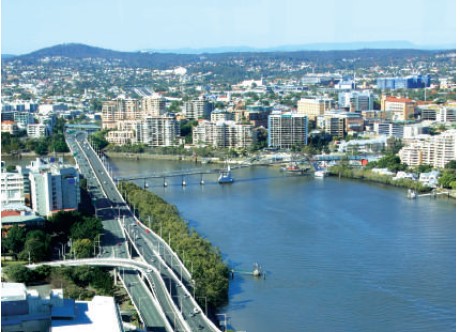
The COVID-19 pandemic has changed people’s priorities in many ways, particularly when it comes to where they want to live. Harrison Astbury explores how renters’ priorities have shifted in the wake of the pandemic and what investors should consider.
The pandemic caused a seismic shift in what Aussies look for when it comes to housing, and specifically where to invest in property.
Even though the pandemic is becoming endemic, many are still turned off by small, inner-city apartments, and despite borders being open-ish, there appears to be only a slow trickle of international students coming back.
To put it succinctly, renters are generally looking for more space, and consequently, that affects investors’ purchasing decisions.
The great sea or tree change
Moving regional is still all the rage, with many renters and homeowners looking to get out of the capital cities as working from home becomes the norm.
Propertyology head of research Simon Pressley identified 59 locations where annual rents could increase by $5,000 or more.
“During the first 12-months of COVID-19, the population of regional Australia increased by 51,000, whereas the eight capital cities produced a combined 17,000 decline,” Mr Pressley said.
“Over two years, some of the biggest rental increases that have already occurred were in, but not limited to, Ballina, Orange and Port Macquarie in NSW, Wangaratta in Victoria and Launceston in Tasmania.
“In Queensland, rents have already been significantly squeezed in popular cities like Cairns, Hervey Bay, Gold Coast and Sunshine Coast. And in Western Australia, it is locations like Busselton and Mandurah.”
This is backed by REA data which shows the combined regions recorded 30% price growth in the past year, as opposed to capital city markets’ performance of 21.7%.
Propertyology also analysed 550 individual Australian property markets and found that Orange NSW was the city that most punched above its weight in terms of house price performance.
In the five years to May 2021, the median property price increased by 78%, while ranking only 56th in terms of population. The top ten list included:
Byron, NSW – 105%
Kingscliff, NSW – 103%
Wonthaggi, VIC – 95%
Yamba, NSW – 86%
Noosa, QLD – 84%
Cooma, NSW – 78%
Leongatha, VIC – 80%
Orange, NSW – 78%
Ballina, NSW – 73%
Kiama, NSW – 70%
The chase for ‘uncut gems’
Well Home Loans’ latest quarterly ‘Green Shoots’ report identified the top 20 suburbs or towns for future growth.
Looking at the three months to January 2022, its selections featured a mix of falling inventory levels, sliding days on market and rising asking prices.
“When you analyse leading indicators like inventory levels and days on market, you get a sense for whether market conditions are tilting towards sellers or buyers, and therefore whether prices are likely to rise or fall in the year ahead,” Well Home Loans’ CEO Scott Spencer said.
The top 20 suburbs in order were:
Suburb
Property Type
Median Price
Hallam, VIC
Unit
$505,000
Broome, WA
House
$589,000
West Lakes, SA
Unit
$529,000
Mango Hill, QLD
Unit
$359,000
Newtown, QLD
Unit
$270,000
Whyalla Norrie, SA
House
$165,075
Wyndham Vale, VIC
House
$513,000
Evanston Gardens, SA
House
$346,900
Bohle Plains, QLD
House
$440,000
Collingwood Park, QLD
House
$435,319
Mount Barker, SA
House
$439,900
Burwood, VIC
Unit
$820,000
Eynesbury, VIC
House
$606,400
Gungahlin, ACT
Unit
$469,000
Leda, WA
House
$325,500
Kirrawee, NSW
Unit
$760,000
Djugun, WA
House
$625,000
Belconnen, ACT
Unit
$450,000
Devonport, TAS
Unit
$319,000
Jurien Bay, WA
House
$450,000
Look afar for good rental yields
If you’re looking for a relatively low entry price in an area that still has good rental price performance, CoreLogic identified in excess of 100 suburbs or towns’ rental yields, with the top 10 being:
South Hedland, WA – 14.6%
Tom Price, WA – 14.1%
Newman, WA – 13.4%
Pioneer, QLD – 12.8%
Kambalda East, WA – 11.6%
Menzies, QLD – 11.4%
Bucasia, QLD – 11.1%
Blackwater, QLD – 10.4%
Dysart, QLD – 10.4%
Mount Morgan, QLD – 10.1%
It’s evident that you might have to venture pretty far to chase rental yields or an uncovered gem, which gives rise to the ‘rentvesting’ phenomenon.
2022 – the year of rentvesting?
Put simply, rentvesting is buying an affordable investment property while renting in a place you actually want to live. The main attraction for this is that it gives first home buyers a leg up on the property ladder while not sacrificing their lifestyle.
And you don’t necessarily need to invest out in the boonies, either.
New analysis from Nicola McDougall, board member of the Property Investment Professionals of Australia (PIPA), and Kate Hill, a buyers agent at Adviseable, identified the top five areas or local government areas to ‘rentvest’ in 2022.
Casey City Council (Melbourne)
Moreton Bay Regional Council (Brisbane)
City of Onkaparinga (Adelaide)
City of Sterling (Perth)
Penrith City Council (Sydney)
“Rentvesting has become a popular strategy for those who want to buy property but still [live] in an expensive real estate city such as Sydney or Melbourne,” Ms McDougall said.
“Being a long-term renter without putting your money to work somehow has significant ramifications on your financial future as well as potentially causing hardship in retirement,” Ms Hill said.
Let’s not totally neglect cities
There’s definitely a sustained regional property push, which is likely to continue in 2022. However, there is still utility in looking at some of the big cities.
RentRabbit looked at some of the best ‘tenant friendly’ suburbs within cooee of a capital city. It may be a case of a ‘build it and they will come’ mentality for investors.
With Melbourne/Victoria absolutely dominating, the top 10 in order were:
Suburb
Distance to Capital City*
Median Weekly Rent
Hoppers Crossing, Vic 3029
37km
$350
Wyndham Vale, Vic 3024
37km
$355
Derrimut, Vic 3030
18km
$380
Pakenham, Vic 3810
74km
$380
Bellbird Park, Qld 4300
23km
$380
Tarneit, Vic 3029
37km
$390
Epping, Vic 3076
34km
$390
Mill Park, Vic 3082
34km
$390
Logan Reserve, Qld 4133
27km
$390
Sunbury, Vic 3429
33km
$395
* ‘Distance to Capital City’ is not the average distance of the suburb to these capital cities but the average distance of the suburb’s ‘SA3’ (a technical term the Australian Bureau of Statistics uses to define a cluster of suburbs) to the capital city.
59 Top Rental Locations 2022
Mr Pressley identified these locations where annual rents could increase by $5,000 or more in a year.
Suburb/City
State
Property Type
Median Price
12-Month Growth
Average Annual Growth
3-Year Growth
5-Year Growth
Weekly Median Advertised Rent
Gross Rental Yield
Adelaide
SA
House
$743,250
10%
4.2%
24%
27%
$480
3.4%
Airlie Beach
QLD
House
$881,250
24%
13.8%
120%
NA
$655
3.9%
Albany
WA
House
$580,000
12%
1.5%
9%
15%
$355
3.2%
Albury
NSW
House
$785,000
31%
8.0%
52%
67%
$420
2.8%
Ballina
NSW
House
$860,000
37%
8.6%
56%
91%
$600
3.6%
Batemans Bay
NSW
House
$600,000
21%
7.1%
50%
69%
$405
3.5%
Bathurst
NSW
House
$559,000
32%
7.5%
37%
57%
$380
3.5%
Bendigo
VIC
House
$605,000
26%
8.3%
56%
41%
$393
3.4%
Bowral
NSW
House
$1,395,000
21%
10.1%
38%
60%
$708
2.6%
Brisbane
QLD
Units
$507,000
7%
1.1%
3%
3%
$490
5.0%
Bundaberg
QLD
House
$315,000
20%
1.7%
24%
5%
$330
5.4%
Burnie
TAS
House
$398,379
19%
8.9%
26%
49%
$330
4.3%
Busselton
WA
House
$482,500
4%
3.5%
4%
-11%
$420
4.5%
Cairns
QLD
House
$530,000
42%
4.8%
20%
9%
$485
4.8%
Canberra
ACT
House
$577,000
NA
NA
NA
NA
$580
5.2%
Coffs Harbour
NSW
House
$720,000
30%
7.6%
45%
64%
$550
4.0%
Dubbo
NSW
House
$455,444
18%
5.9%
23%
28%
$395
4.5%
Esperance
WA
House
$360,000
19%
0.7%
21%
8%
$350
5.1%
Geelong
VIC
House
$952,500
6%
7.2%
32%
66%
$450
2.5%
Geraldton
WA
House
$285,000
10%
-1.3%
24%
-5%
$335
6.1%
Gladstone
QLD
House
$285,000
16%
-1.1%
NA
-10%
$310
5.7%
Gold Coast (Surfers Paradise)
QLD
House
$1,750,000
19%
3.6%
42%
21%
$820
2.4%
Gosford
NSW
House
$937,500
NA
14.1%
NA
NA
$420
2.3%
Goulburn
NSW
House
$520,000
21%
6.9%
24%
41%
$390
3.9%
Gympie
QLD
House
$400,000
33%
5.7%
53%
63%
$375
4.9%
Hervey Bay
QLD
House
NA
NA
NA
NA
NA
NA
NA
Kiama
NSW
House
$1,450,000
41%
10.7%
57%
70%
$600
2.2%
Kempsey
NSW
House
$347,000
29%
9.0%
49%
114%
$330
4.9%
Kingscliff
NSW
House
$1,800,000
45%
11.6%
93%
110%
$800
2.3%
Launceston
TAS
House
$677,250
17%
7.8%
21%
76%
$450
3.5%
Lismore
NSW
House
$490,000
32%
6.1%
42%
63%
$430
4.6%
Lorne
VIC
House
$2,010,000
33%
10.4%
75%
161%
$890
2.3%
Mackay
QLD
House
$335,000
18%
-0.4%
18%
34%
$380
5.9%
Maitland
NSW
House
$564,000
31%
8.0%
47%
80%
$430
4.0%
Maryborough
QLD
House
$287,000
31%
2.9%
44%
44%
$330
6.0%
Mount Barker
SA
House
$470,000
11%
2.5%
15%
11%
$420
4.6%
Mount Gambier
SA
House
$295,000
13%
2.6%
16%
20%
$320
5.6%
Mornington Peninsula
VIC
House
$1,087,000
24%
8.1%
35%
48%
$575
2.7%
Mudgee
NSW
House
$600,000
28%
6.9%
52%
59%
$475
4.1%
Newcastle
NSW
House
$1,355,000
NA
11.1%
-24%
NA
NA
NA
Noosa
QLD
House
$1,800,000
29%
11.8%
57%
114%
$890
2.6%
Orange
NSW
House
$605,000
27%
7.0%
49%
73%
$460
4.0%
Perth
WA
House
$856,000
8%
2.5%
17%
4%
$550
3.3%
Port Macquarie
NSW
House
$775,000
29%
7.4%
35%
49%
$550
3.7%
Rockhampton
QLD
House
$210,000
35%
1.0%
33%
32%
$300
7.4%
Sunshine Coast (Caloundra)
QLD
House
$810,000
43%
8.0%
53%
49%
$495
3.2%
Toowoomba City
QLD
House
$441,250
32%
5.4%
19%
22%
$380
4.5%
Torquay
VIC
House
$470,000
31%
5.0%
42%
45%
$398
4.4%
Townsville City
QLD
House
$595,000
NA
-25.4%
NA
NA
$400
3.5%
Traralgon
VIC
House
$405,000
19%
4.3%
36%
50%
$389
5.0%
Wagga
NSW
House
$515,000
14%
4.6%
29%
36%
$410
4.1%
Wangaratta
VIC
House
$430,000
21%
6.0%
35%
58%
$393
4.7%
Warrnambool
VIC
House
$517,250
26%
5.2%
48%
62%
$420
4.2%
Warragul
VIC
House
$582,000
18%
7.1%
35%
71%
$415
3.7%
Warwick
QLD
House
$290,000
15%
1.5%
5%
16%
$293
5.2%
Wodonga
VIC
House
$440,000
26%
4.9%
26%
40%
$400
4.7%
Wollongong
NSW
House
$1,230,000
42%
11.0%
43%
57%
$580
2.5%
Yamba
NSW
House
$812,500
27%
10.1%
52%
58%
$560
3.6%
Yeppoon
QLD
House
$445,000
14%
1.1%
33%
24%
$480
5.6%