Over the past few weeks, several leading real estate organizations have published detailed assessments of the impact of COVID-19 on the Australian real estate market. The consensus is that, although sales activity has declined significantly, it is too early to conclude if real estate prices have been affected. Based on current data, median prices remain stable despite restrictions on the real estate industry and general downturns in the economy.
In this article, we will take a close look at the latest sales data in major Australian capitals – Sydney, Melbourne, Brisbane, Adelaide, Perth and Canberra. We will establish market trends before the pandemic spreads at the start of the year and compare them to the values ??declared in March, April and early May. These 3 months mean the introduction and subsequent relaxation of COVID-19 restrictions across the country. Therefore, analysis of real estate market data during this period will provide us with valuable insight into the impact of the pandemic on the Australian real estate market.
Introduction
HtAG® is a web portal for real estate professionals that helps clients make property-related decisions based on timely and actionable market information. We leverage the benefits of machine learning algorithms to classify the growth potential of different areas of local government and suburbs, across Australia.
HtAG® collects data from the Australian real estate market via a Web Crawler which systematically browses the main real estate portals and agent websites and indexes past sales, current listings and rental data. The data is then cleaned and analyzed to detect key market trends to help real estate professionals perform market research.
The data set used in this article is a subset of all the data on closed sales collected between September 2018 and April 2020. The data is segmented by 6 major capitals – Sydney, Melbourne, Brisbane, Adelaide, Perth, Canberra. It does NOT contain data for rural areas outside the city limits. Each sale is assigned to one of 3 types of housing: houses, units and townhouses.
The inspiration to make this dataset public is to provide the raw sales data to the community to help analyze the impact of COVID-19 on the Australian real estate market. Our data science team has prepared several graphs that will be used in this article to visualize real estate market trends in the time frames associated with the spread of the pandemic.
Before delving into our evaluation, let's first visualize the data set in the simplest way possible, a point cloud with 2 variables: date of sale (x axis) and price (y axis).
By examining the scatter diagrams below, it is immediately obvious that the sales activity is very different on the 6 markets of the capital. As expected, Sydney and Melbourne have the highest number of sales recorded and a much wider price range than Brisbane, Adelaide, Canberra and Perth.
The Melbournians love townhouses, which account for a significant portion of sales in the city. Contrary to this, sales of townhouses are almost non-existent in Perth and Adelaide. Data on the type of housing in Sydney, Brisbane and Canberra are relatively well balanced between the houses, units and townhouses marked green red and blue on the graph.
Although there are significant differences in the data for the 6 cities, there are also some common characteristics. We observe regular sales differences, which can be attributed to weekends (there are around 70 of these differences on each graph). There is a significant drop in activity around the Christmas period (2 significant deviations on the charts in December 2018 and 2019).
There is also a slightly weaker but noticeable slowdown during the Easter weekends (April 21, 2019 and April 12, 2020). The latter will pose some challenges for us, as it is also part of the slowdown associated with COVID-19 restrictions. We will have to take this fact into account in our assessment.
Impact of COVID-19 on property sales
On March 25, 2020, the Australian government banned auctions and open houses. Although most states and territories have since relaxed the restrictions, in fact, no auctions or inspections have taken place for at least a month in all capitals.
It is important to note that the ban coincided with the long Easter weekend (April 10-13) during which, as we have already established, the activity of & # 39; Buying and selling has declined significantly in previous years. As we see in the bar graphs below, this drop was further exacerbated by the COVID-19 restrictions.
Let us now explore the real estate market trends that preceded the recent decline in commercial activity.
First, we see the magnitude of the decline of the Christmas period. The 2 weeks of Christmas almost put an end to sales. This is not surprising, since most companies close their doors and people go on vacation.
Second, the second half of 2019 was fairly dynamic in terms of sales volume. During its peak week, the urban housing market recorded 600 more sales than the peak of the previous year. We are seeing this accelerated growth in commercial activity on all 3 types of properties: houses, units and townhouses. There is only a slight drop in sales around Easter weekend 2019.
Finally, we are witnessing a very aggressive start to the year 2020. The market reached its peak in late February sales, with volumes higher than those recorded for the same period in 2019. This peak was followed by an immediate contraction in early March, sales then gradually decreasing during the rest of the months and April to reach their lowest level since the start of the year.
The bar graphs above zoom in on the first 4 months of the years 2019 and 2020, so that we can compare sales during these 2 analogous periods.
2020 Easter came a week earlier than in 2019, which is marked on the graphs in the lower right corner. We see that sales return to their level before Easter at the end of the 2 short weeks of work in 2019. This is however not the case in 2020. Sales already falling continue to fall, with just a slight increase in unit sales recorded after the Easter period. Sales volume was already 20% below the 2019 minimum before the Easter holidays in 2020.
Overall, we see a drop of almost 60% in sales in the post-Easter period in 2020 compared to 2019.
Impact of COVID-19 on the median price
We assessed the impact of COVID-19 on sales activity. Now let's see if the drop in sales translated into lower house prices.
Median real estate prices are commonly reported at quarterly intervals. There is a good reason for this. Housing markets are fairly slow in speed, which is reasonable given the high price and the lengthy processes associated with a real estate transaction. Thus, for the median price to be representative of the true median real value, there must be a significant amount of sales during the period for which it is declared. A calendar quarter usually accumulates enough sales for the median price to be accurate, but it is not uncommon to see prices reported at monthly and weekly intervals.
We will first explore the median price quarterly. Since we are in the middle of the 2nd quarter, there should be enough accumulated sales so that we can assess whether prices have been affected by the pandemic.
By looking at the graphs above, we can see that the prices at Q2 2020 are not at their lowest local price level (September 2018 – April 2020) in the majority of the markets urban. There are some notable exceptions:
Sydney townhouses
Adelaide Units
Adelaide and Perth Homes
While the 3 graphs above tell us a good story, it is difficult to understand how prices have changed in the period that interests us. We will ignore the seemingly large amplitude fluctuations of the Sydney median price for now. The scale of the graph is not suitable for the lower price range in other capitals, so their medians may seem almost linear, when in reality they have their own highs and lows. To better understand these changes, we will need to plot the quarterly difference as a percentage of the median price.
Percentage change graphs are frequently used for the analysis of time series due to the clarity of the presentation of the rate of change over time. An important feature to consider is the thick black horizontal line in the middle which means the 0% point at which negative growth turns positive and vice versa.
To simplify, an ever-increasing median price will never cross the thick black line down.
Interestingly, Sydney homes experienced unprecedented + 20% quarterly growth in Q4 2019. This was followed by a negative -10% retracement in the following quarter, so it was not just a problem of scale on our median price line graphs. We can see that the median house price has stayed in the negative region for 2 consecutive quarters this year, reversing most of the gains in 2019.
It is also important to note that both Q1 2019 and Q1 2020 show a similar rate of decline. This is normal for the housing market, when, due to extended vacations, sales of more expensive properties take place in the first quarter of the year compared to the last quarter of the previous year. However, the market tends to “warm up” in the second quarter, but as we can see, house prices for all capitals remain in negative territory in Q2 2020.
The units have a different growth pattern than that of the houses. While house prices follow a similar cyclical pattern in all capitals, Adelaide and Brisbane are moving against the position in the Melbourne and Sydney markets (quarterly).
In particular, the Adelaide units had a roller coaster year in 2019, but are showing signs of stabilization with modest growth of 1 to 2% in the first 2 quarters of 2020. The Brisbane units just enter negative territory as I am. the writing of this article ends with a decrease of -1% in Q2 2020. The Sydney and Melbourne units posted 2 consecutive decreases in Q1 and Q2 on average at -2% per quarter.
Interestingly, the Sydney townhouses did not perform very well this year. A 15% drop in median values ??was recorded for the second quarter in the capital of NSW. A slightly smaller but more prolonged decline is observed in the row house market in Melbourne.
Conclusion
Based on the latest sales data, a noticeable drop in the median price in the major capitals is beginning to occur. It is reasonable to conclude that the drop is associated with the COVID-19 event, given the previous market growth in the second half of 2019 and early 2020. There is a marked drop in the 39; market activity across the country, although some markets continue to grow despite the slowdown.
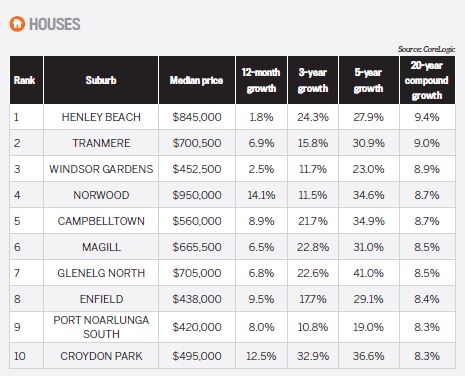
It is important to note that there are markets inside the markets and although prices are falling in most capitals, there are council areas and suburbs in each city which still show positive growth.
The interactive maps below show the year-on-year growth in Q2 2020 for the areas of the municipalities of Sydney, Melbourne, Perth and Adelaide. Inland Brisbane and Canberra maps illustrate year-over-year growth at the suburban level.
I'll let the cards speak for themselves, but there are some interesting suburbs in Brisbane and Canberra.
Tip: Click on the zoom button () to activate the control of the scrolling of the mouse on the map.
We encourage you to always refer to the number of sales in growth areas to ensure that the median price and percentage growth values ??are calculated relative to a sufficiently high sales volume. Typically, there must be at least 10 sales in a suburb for the median price and growth percentages to be accurate.
Data source: https://www.kaggle.com/htagholdings/aus-real-estate-sales-march-2019-to-april-2020
Image source: https://www.kaggle.com/alexfedoseev/covid-19-impact-on-australian-property-market
Source of the map: https://www.htag.com.au/covid-19-impact-on-australian-property-market/
By Alex Fedoseev | Data overview and strategy | HtAG Holdings